In Fintech, You Don't Acquire Customers - You Borrow Someone Else's: The Embedded Distribution Play
Go-To-Market Series – Part 4
March 16, 2026
So far this series has built three ideas. There is no universal go-to-market playbook, because whoever controls access to the buyer is different in every industry. New categories endure a long, cold "warm-up" before the market understands them. And what carries a founder across that cold stretch is not a tactic but a clear sense of why they started.
Fintech tests all three under the harshest condition of any sector: money requires trust, and trust is the slowest thing in the world to build. It requires grit, consistency between thought, word and action over a much longer stretch of time.
Introduction:
Think about what you're asking of a customer when you launch a financial product. You're a stranger, and you want them to route their salary through you, store their savings with you, or borrow from you. A consumer will try a new coffee brand on a whim. They will not move their money to an app they've never heard of on a whim. The warm-up in fintech isn't months of product education - it's years of earning the right to be trusted with the one thing people guard most carefully.
This creates a brutal arithmetic. Acquiring a financial customer the normal way - advertising, offering them a reason to switch, waiting for them to trust you - is ruinously slow and expensive. So the smartest fintech companies discovered a different answer, and it is the heart of this article: don't try to win the customer's trust yourself. Borrow it from someone they already trust. Don't acquire customers. Embed yourself where they already are.
Let's watch how this plays out - first in India, where it built the most-used payment system on earth; then globally, where it turned a financing company into a fixture of online checkout: and finally in a cautionary tale, where borrowing someone else's distribution quietly became the thing that killed the company.
India: how PhonePe borrowed Flipkart's millions
In 2015–16, India had a problem that looked impossible. Hundreds of millions of people, most of them deeply cash-dependent, many of them wary of digital banking. How do you get a country like that to trust a payments app?
PhonePe's answer was not to advertise its way in. It was built around the new Unified Payments Interface (UPI) - a government-backed, bank-to-bank payment rail - and crucially, it was plugged directly into Flipkart, India's largest e-commerce platform (which shared an owner with PhonePe). Every time a customer paid for a Flipkart order, they used PhonePe. The company's early growth was built on distribution leverage rather than paid advertising: it reached millions of digitally active consumers at effectively zero acquisition cost, because it was riding inside a platform those consumers already used and trusted.
Notice what's happening against the Part 1 framework. PhonePe didn't have to teach India to trust PhonePe. It borrowed the trust Indians already had in Flipkart and in their own banks, and inserted itself into a transaction that was already happening. The boat didn't have to find a river - it slipped into one that was already flowing.
Then came the warm-up's lucky break. In November 2016, the Indian government abruptly cancelled most of the country's cash overnight - "demonetization." Suddenly the entire nation needed a digital way to pay, immediately. PhonePe's UPI-first design was built for exactly that moment, while older wallet-based competitors required users to pre-load money into a closed system. The market didn't just warm up; it caught fire, and PhonePe was already standing where the fire started.
The results, years later, are staggering. By late 2025 PhonePe was processing around half of all UPI transaction value in India, with roughly 65 crore (650 million) registered users and merchant acceptance reaching over 98% of Indian pin codes. It went from a payments app to the financial backbone of a nation - and the foundation of all of it was the decision to borrow distribution rather than buy it.
There's a second, subtler lesson here that runs through your own market. UPI itself was open infrastructure - any company could build on it. India deliberately chose an open, interoperable public rail over the "walled garden" model that countries like China took. That openness is what let a challenger like PhonePe borrow distribution at all. When the rails are open, the winner is whoever embeds most cleverly. When the rails are closed, the owner of the rails wins by default. Remember that distinction - it returns, painfully, at the end of this article.
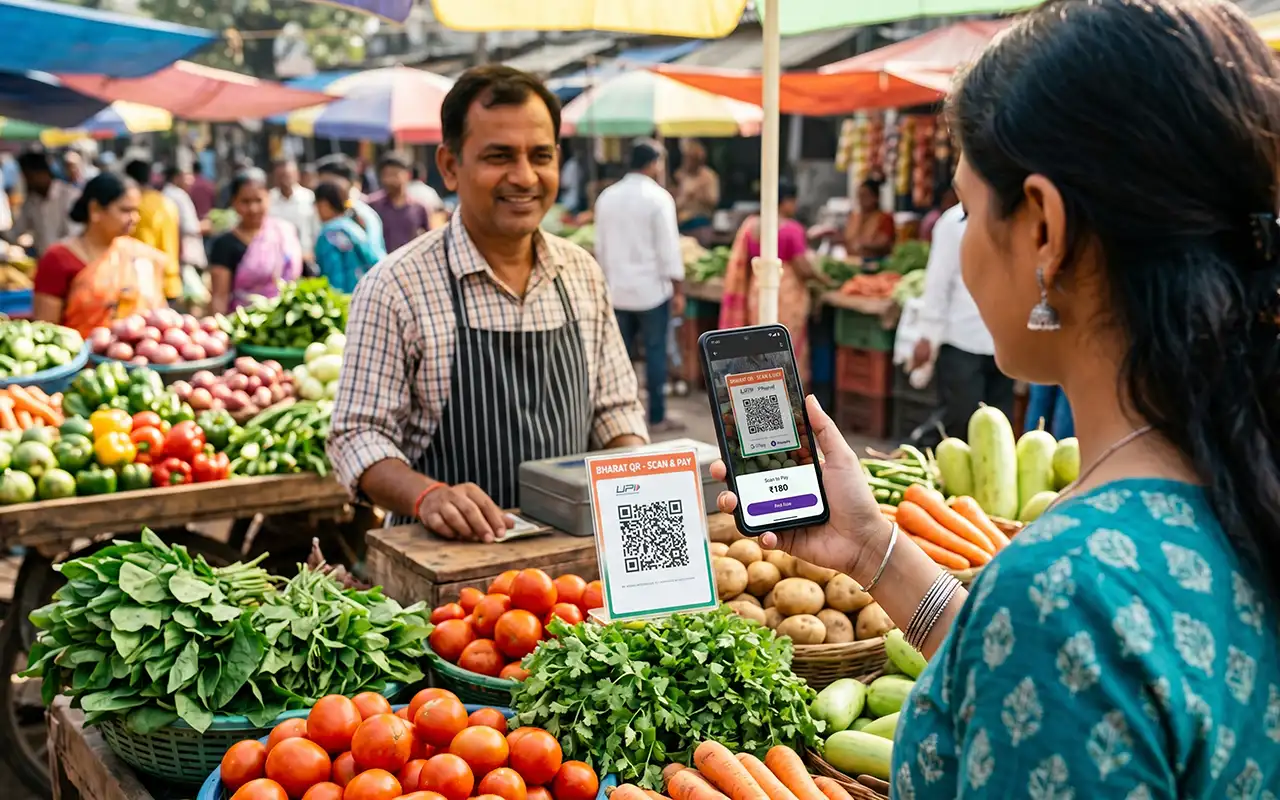
The world: how Affirm became part of the checkout itself
Now travel to the United States and a different flavour of the same idea.
Affirm sells "buy now, pay later" - the option to split a purchase into instalments. Its founders faced the classic fintech cold-start: why would a consumer apply for financing from a company they've never heard of, before they've even decided to buy something?
Affirm's answer was to stop trying to be a destination and instead become a feature inside other people's checkouts. Rather than convince shoppers to come to Affirm, it embedded its "Pay with Affirm" button directly into the moment of purchase - on retailer websites, and through the payment infrastructure that thousands of merchants already run on. Its strategy reads like a map of other people's distribution: integrate with payment processors like Stripe and Adyen to reach countless small merchants at once; embed into e-commerce platforms like Shopify; partner with travel sites like Expedia and Booking.com; appear inside Google Chrome's autofill and Apple Pay.
The logic is pure Part 4. Affirm doesn't ask the customer to trust Affirm first. It appears at the exact instant the customer has decided to buy something from a merchant they already trust, and offers to make that purchase easier. The trust is borrowed from the retailer and the checkout; Affirm just supplies the financing underneath. One integration - becoming the first BNPL provider built into Stripe's in-store card terminals - put Affirm in front of over a million physical store locations at once, without Affirm signing up a single one of them individually.
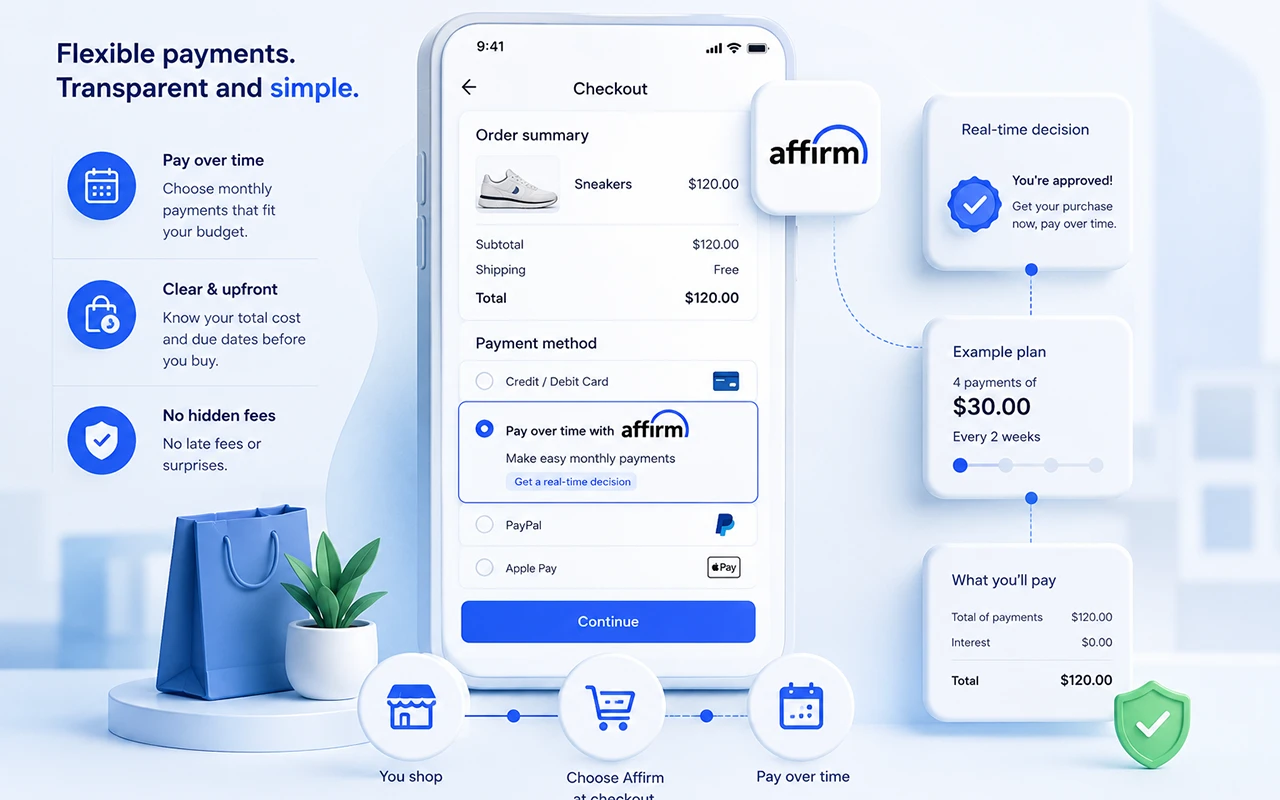
Look at the leverage. A traditional lender acquires borrowers one expensive application at a time. Affirm acquires them by the platform - every merchant that switches on the feature delivers all of that merchant's customers in a single move. Transactions surged accordingly; in one recent quarter Affirm processed over 31 million transactions, up roughly 46% year on year. That is what borrowing distribution at scale looks like.
But hold the applause for one beat, because Affirm's own story contains the warning. Analysts who follow it keep circling the same risk: partner concentration. When your growth depends on living inside other people's platforms, those platforms hold real power over you. If a major partner walked away, a large slice of Affirm's reach would walk with it. Borrowed distribution is borrowed - and the lender can ask for it back. Which brings us to the company that learned this the hard way.
The failure: how Simple died inside someone else's house
Here is the cautionary tale, and it is the most important part of this article, because it is the same strategy as PhonePe and Affirm - viewed from the day it goes wrong.
Simple, launched in 2012, was one of America's first neobanks. By every product measure it was a success. It had a beautifully designed app, genuinely innovative budgeting tools that made traditional banks look ancient, and a passionate, loyal customer base who loved it. If great product guaranteed survival, Simple would still be here.
But Simple was not actually a bank. Like nearly every neobank, it didn't hold a banking licence; it relied on a partner bank to hold deposits and process transactions. Its product lived, by necessity, inside someone else's regulatory and financial house. In 2014, the global banking giant BBVA acquired Simple for $117 million - which looked like a triumph, and which quietly sealed its fate.
Because now Simple's existence depended entirely on the strategic whims of a corporate parent. For years that was fine. Then in 2021, BBVA sold its U.S. operations to PNC Financial Services. PNC looked at Simple, saw a digital platform that overlapped with its own banking products, and made a cold business decision: shut it down. Simple's hundreds of thousands of loyal customers were left scrambling to move their money elsewhere. The app they loved disappeared - not because it failed in the market, but because the house it was renting got sold, and the new landlord didn't want the tenant.
Sit with the contrast, because it is the whole lesson of this series compressed into one company. PhonePe borrowed Flipkart's distribution and won. Affirm borrowed Stripe's distribution and grew enormously. Simple borrowed a bank's licence and died - not from a product flaw, but from a dependency it could never control. The exact same strategy - build on rails you don't own - is a superpower on the way up and a noose on the way down. The difference is entirely in whether you understand, going in, how much power you've handed to the platform you're standing on.
The fintech graveyard is full of companies that confused a great product with a great business. As one analysis of fintech failures put it bluntly, a sleek app with a great user experience is not a business. Simple had the best app in banking and still vanished, because it never controlled the one thing that mattered - its own relationship with the financial system.

What a founder should take from this
Four transferable lessons, each a thread from earlier in the series, now sharpened by the trust problem unique to fintech:
- When trust is the barrier, borrow it instead of building it. The slowest, most expensive thing in fintech is earning a stranger's trust with their money. Embedding into a platform the customer already trusts - a marketplace, a checkout, a bank - lets you skip years of cold warm-up. Don't ask to be trusted; appear where trust already lives.
- Borrowed distribution scales by the platform, not the person. The reason embedded finance is so powerful is leverage: every partner you integrate delivers all of their customers at once. One Stripe integration beats a million individual sign-ups. If you can reach your market through someone else's front door, you grow at their scale, not yours.
- Every rail you borrow is a dependency you don't control - price that in from day one. Simple died, and Affirm's analysts worry, for the same reason: power belongs to whoever owns the rails. Before you build on someone else's platform, ask what happens if they change the rules, raise the price, or sell the house. Borrowed distribution is rented, never owned.
- Open rails reward the cleverest embedder; closed rails reward the owner. PhonePe could thrive because UPI was open infrastructure that no single company controlled. Simple was fragile because it depended on one private bank. When you choose where to embed, prefer open, interoperable rails over a single gatekeeper - your survival shouldn't rest on one landlord's mood.
And beneath all four, the constant of this series. Borrowing distribution gets you to the market fast, but it also means part of your fate sits in someone else's hands from the very first day. Surviving that - choosing the right rails, pricing the dependency honestly, holding your nerve when a platform squeezes you - takes more than a clever integration. It takes a founder clear enough about why they're building to make the hard structural choices early, before the platform they're standing on decides to move.
In the next article, we enter the cruelest market of all for go-to-market - healthcare - where the person who loves your product, the person who chooses it, and the person who pays for it are three completely different people, and nothing you build reaches anyone until you've solved that puzzle.